
Why Weight Matters: The Importance of Clearly Marked Concrete Ballast Blocks
When it comes to temporary structures, knowing the weight of your ballast blocks isn't just a matter of convenience, it's an important part of safe design, installation and site management, according to Owen Batham, Core Sales Director at Elite Precast Concrete.
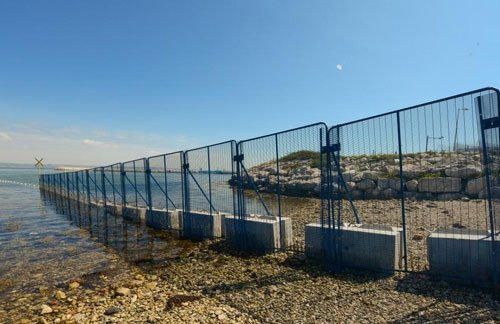
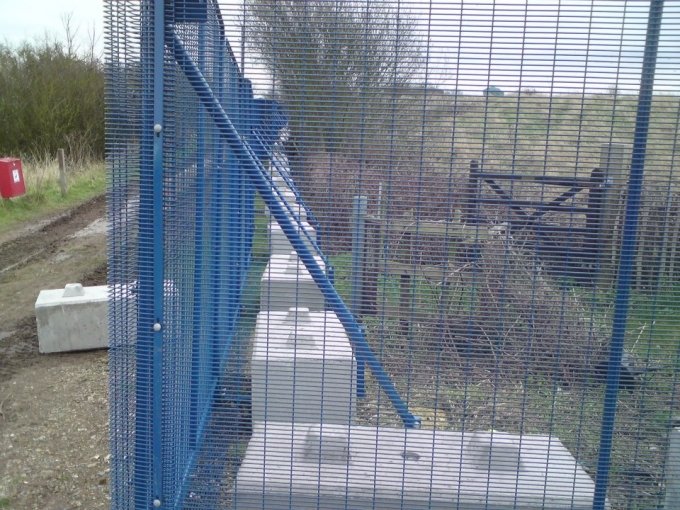
From marquees and temporary event structures to scaffolding, hoardings, temporary fencing and site installations, concrete ballast blocks provide a practical solution where structures need to be secured without permanent foundations or ground penetration.
However, the effectiveness of any ballast system depends on more than simply positioning heavy concrete blocks around a structure. Understanding the weight of each block is essential to ensuring that the correct ballast is specified, lifting operations are properly planned and temporary structures remain stable throughout their use.

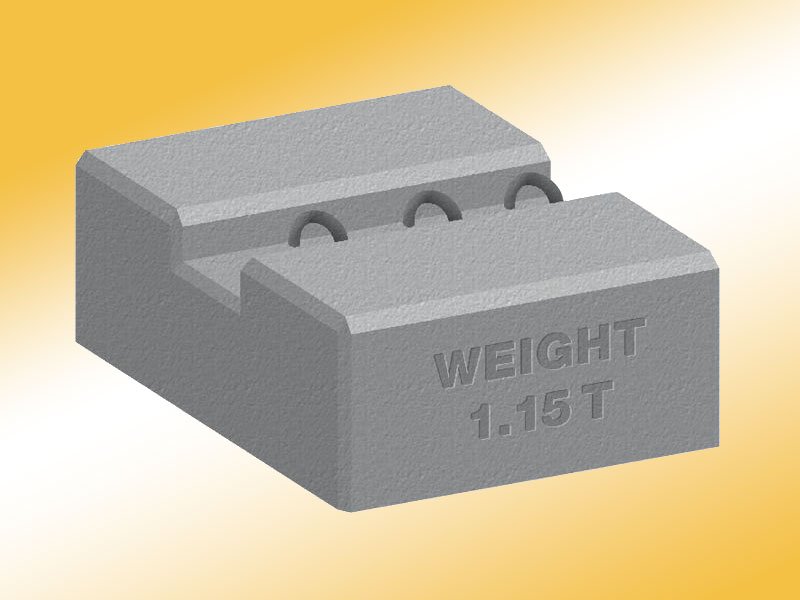
At Elite Precast Concrete, we recognise the importance of making this information readily available. That's why we cast the weight of each ballast block directly into the concrete, providing a permanent, visible indication of its nominal weight.
It's a straightforward feature, but one that can make a significant difference to safety, efficiency and confidence on site.
Why Is Ballast Block Weight So Important?
Concrete ballast blocks are commonly used to provide stability and resistance against forces such as wind loading, overturning and movement.
For temporary structures, the correct amount of ballast must be determined by a competent designer, taking into account the structure, its location, expected loads, ground conditions and relevant design requirements.
Using insufficient ballast can compromise stability, while unnecessarily heavy ballast may introduce additional lifting, handling and ground-loading challenges.
Clearly identifying the weight of individual blocks helps contractors, event organisers, temporary works designers and installation teams understand exactly what equipment they are working with.
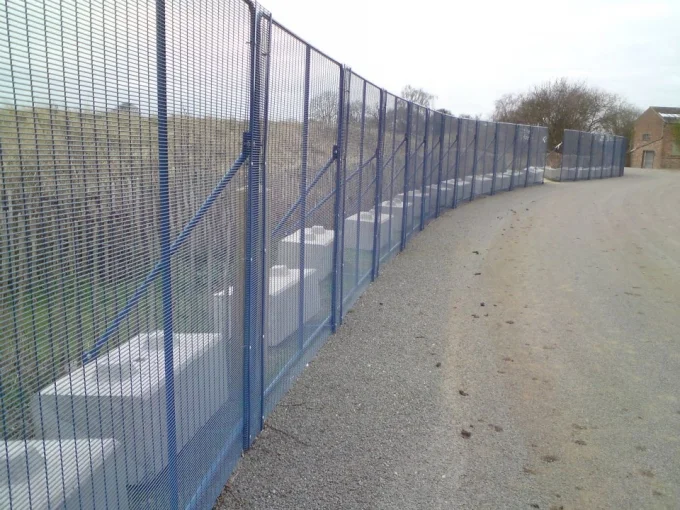
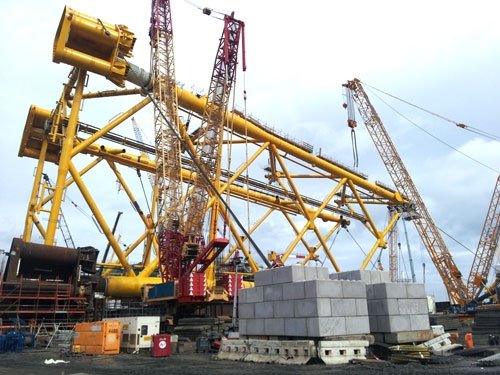
Safety ballast at ports and docks
Accurate ballast calculations: Helping designers and installers verify the intended ballast provision.
Safer lifting operations: Allowing lifting teams to identify the nominal load before selecting suitable lifting equipment and accessories.
Efficient installation: Making it easier to select and position the correct blocks without unnecessary handling.
Site inspections: Supporting visual checks that the specified ballast blocks have been installed.
Reduced risk of confusion: Helping distinguish between different block sizes and weights, particularly where multiple products are being used on the same site.

Why Elite Precast Casts the Weight into Every Ballast Block
Unlike painted markings, adhesive labels or temporary identification tags, a weight marking cast directly into the concrete becomes a permanent part of the product.
Temporary markings can deteriorate, fade, become detached or be obscured during transportation, storage and repeated use.
By incorporating the weight into the manufacturing process, Elite Precast provides a durable identification method designed to remain with the block throughout its working life.
This is particularly valuable in the events and temporary works sectors, where ballast blocks may be transported, installed, removed, stored and reused many times.
The benefits include improved product identification, easier equipment selection and greater confidence when blocks are transferred between sites or used by different contractors.
For businesses managing substantial inventories of ballast blocks, permanent markings can also help simplify stock management and reduce the likelihood of selecting an incorrect block.
Importantly, the cast-in weight identifies the nominal product weight. Appropriate allowances for manufacturing tolerances, lifting accessories and other relevant factors must still be considered when planning lifting operations or designing ballast arrangements.
What Does the Temporary Works Forum Say About Ballast Block Weights?
The importance of clearly identifying the weight of concrete ballast blocks is supported by guidance published by the Temporary Works Forum (TWf), an industry body promoting good practice in the design and management of temporary works.
In its publication Hoardings – A Guide to Good Practice (TWf2012:01, revised August 2020), the Forum addresses the use of proprietary above-ground foundation blocks.
Section 4.8.4, on page 19, states: "The weight of each block should be known (marked on the block) and lifting points (or other means for mechanical lifting) provided."
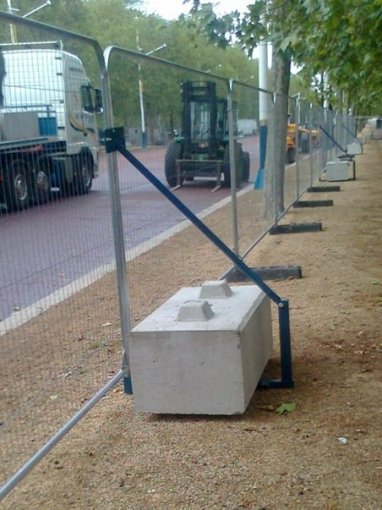
This is a particularly important recommendation because concrete ballast blocks are frequently used to stabilise temporary hoardings and structures in areas where conventional foundations may be impractical.
The guidance also explains that above-ground foundation blocks should be checked for sliding and overturning under the prevailing site conditions, with sufficient technical information provided by the supplier.
By permanently casting the nominal weight into its ballast blocks, Elite Precast Concrete follows the marking principle set out in this recognised industry guidance.
Although the guidance specifically addresses hoardings and temporary works, the principle of clear weight identification is relevant to a much wider range of ballast applications.
It is important to distinguish this industry recommendation from a universal statutory requirement: the TWf guidance recommends marking block weights, rather than establishing a legal obligation for every type of ballast block.
Supporting Safer Lifting and Handling
Concrete ballast blocks can weigh anything from a few hundred kilograms to several tonnes. Moving these products requires appropriate lifting equipment, trained personnel and properly planned lifting operations.
Under the Lifting Operations and Lifting Equipment Regulations 1998 (LOLER), lifting operations must be properly planned by a competent person, appropriately supervised and carried out safely.
Clearly marked block weights help lifting teams establish the loads involved, supporting the selection of suitable cranes, forklifts, lifting accessories and handling methods.
However, knowing the weight alone is not sufficient. The condition and suitability of lifting points, lifting geometry, equipment capacity and site conditions must also be assessed.
Permanent weight markings provide useful information at the point of use, helping teams make informed decisions before lifting begins
Supporting the Safety of Marquees and Temporary Event Structures
The events industry relies heavily on temporary structures, particularly where ground anchors cannot be used.
Historic properties, landscaped gardens, paved areas, sports venues and urban locations may all require non-penetrative ballast solutions.
For example, a marquee installed within the grounds of a historic venue may require substantial ballast to resist the wind loads identified in its structural design.
When multiple ballast blocks are delivered to site, clearly identifying their weights helps installation teams verify that the correct products are positioned in accordance with the approved design.
This becomes especially important where different sizes of blocks are used together or where the installation must be completed within a restricted timeframe.
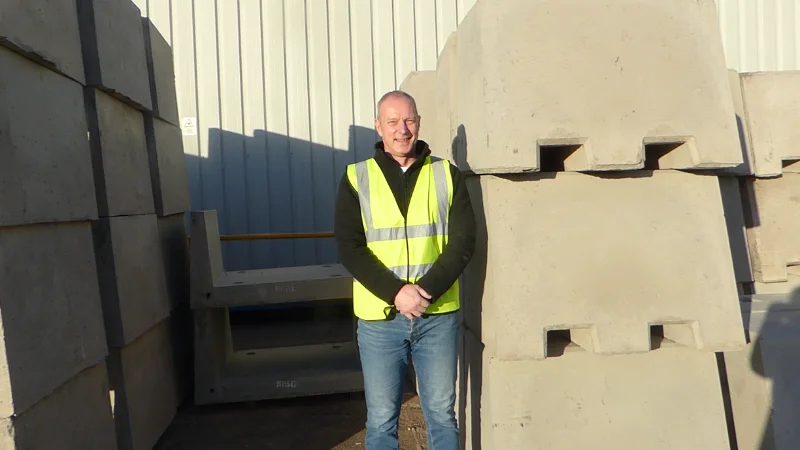
Elite Precast manufactures a range of precast concrete ballast blocks for applications including marquees, hoardings, scaffolding and other temporary structures.

Why Permanent Weight Markings Are Better Than Guesswork
Not all concrete blocks of similar dimensions necessarily have the same weight.
Differences in dimensions, concrete density, reinforcement, cast-in features and manufacturing specifications can influence the finished mass.
Simply estimating weight from appearance or dimensions is therefore not a reliable approach to temporary works design or lifting operations. A permanent cast-in marking provides immediate access to the manufacturer's stated nominal weight, reducing reliance on assumptions.
It also supports communication between suppliers, contractors, designers and installation teams, particularly where blocks are moved between projects.
The marking should always be considered alongside the manufacturer's current technical information, especially where precise weight verification is required.

A Commitment to Safety Built into Every Block
At Elite Precast Concrete, we believe that safety should be considered throughout the product lifecycle, from design and manufacture to delivery, installation and eventual removal.
Casting the nominal weight into our ballast blocks is one example of how practical manufacturing decisions can support safer working practices.
By making weight information permanently visible, we help customers identify products, plan lifting operations and check that the appropriate ballast has been selected.
The Temporary Works Forum's guidance reinforces the importance of this approach, says Owen, demonstrating that even relatively simple product features can contribute to better temporary works management. Because when it comes to ballast, knowing the weight matters just as much as having the weight.
Discover Elite Precast Concrete's Ballast Block Range
Whether you're planning a marquee installation, temporary hoarding, scaffolding arrangement or major infrastructure project, Elite Precast Concrete offers a comprehensive range of precast concrete ballast solutions, concludes Owen.
Manufactured at our facilities in Telford, Shropshire, our ballast blocks are available in a variety of sizes and nominal weights to suit different project requirements.
Explore our Ballast Block Range or contact our experienced team on 01952 588885 (6.00am – 4.30pm, Monday to Friday) to discuss your requirements.