01952 588 885













Lithium-ion batteries are powering everything from mobile phones and laptops to power tools, e-bikes and electric vehicles. Unfortunately, they are also becoming one of the fastest-growing causes of fires at waste recycling centres across the UK.
Every year, hundreds of recycling facilities suffer devastating fires after damaged or discarded batteries enter the waste stream. These incidents place employees at risk, destroy valuable equipment, interrupt operations and can cost businesses millions of pounds.
For waste operators, preventing battery fires has become a major operational priority, according to Louise Chouhan-Hodges of Elite Precast Concrete. She continues by asking why are lithium batteries so dangerous?
Unlike conventional fires, lithium-ion batteries can experience thermal runaway. When damaged, crushed or overheated, the battery cells rapidly generate heat which causes neighbouring cells to ignite. Temperatures can exceed 600°C and continue to increase as the chemical reaction spreads.
The result is a fire that:
- Ignites extremely quickly
- Is difficult to extinguish
- Can reignite hours or even days later
- Releases toxic gases
- Spreads rapidly through combustible waste
Why are recycling centres are particularly vulnerable? Waste facilities process enormous volumes of mixed materials every day. Hidden batteries frequently enter via:
- Household waste
- Commercial waste
- Construction waste
- WEEE recycling
- Metal recycling
- Plastic recycling
- During handling they may be:
- Crushed
- Punctured
- Compacted
- Shredded
Any of these can trigger thermal runaway.
What is the financial impact of fires? A major waste fire can result in:
- Months of downtime
- Replacement of plant and machinery
- Environmental clean-up costs
- Higher insurance premiums
- Loss of contracts
- Regulatory investigations
Many operators are now reviewing storage layouts to minimise fire spread should ignition occur.
Fire separation is becoming essential
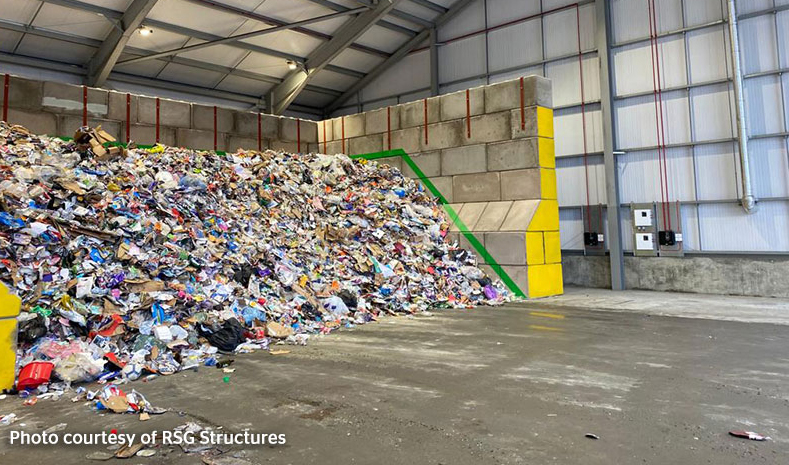
Industry guidance increasingly recommends separating waste streams into smaller storage areas to reduce the likelihood of one fire spreading across an entire site.
This is where modular concrete walling systems provide a significant advantage.
Louise asks if Legato® walling can help you?
Elite Precast’s Legato® Interlocking Concrete Blocks create rapid-build fire separation walls that help isolate combustible materials, with benefits including:
- A1 fire rated
- Fast dry installation
- No foundations in many applications
- Easily reconfigured as sites change
- Suitable for temporary or permanent storage bays
- Extremely durable
- Available from stock
For operators looking to improve fire resilience, modular concrete walling provides a practical solution that can be installed with minimal disruption and is part of your Fire Protection Planning (FPP).
In conclusion, Louise says that as battery fires continue to increase across the UK, prevention and containment have become just as important as detection and suppression. Investing in effective fire separation measures can help keep people safe, significantly reduce operational risk and improve site resilience.
To find out more visit www.eliteprecast.co.uk or call the Elite team on 01952 588885.